

Time to read: 6 minutes
What we are unpacking today:

Hi {{first_name | default: 'there'}}!
How I Built My TEDx Talk (With a Lot of Help From My AI Friends)
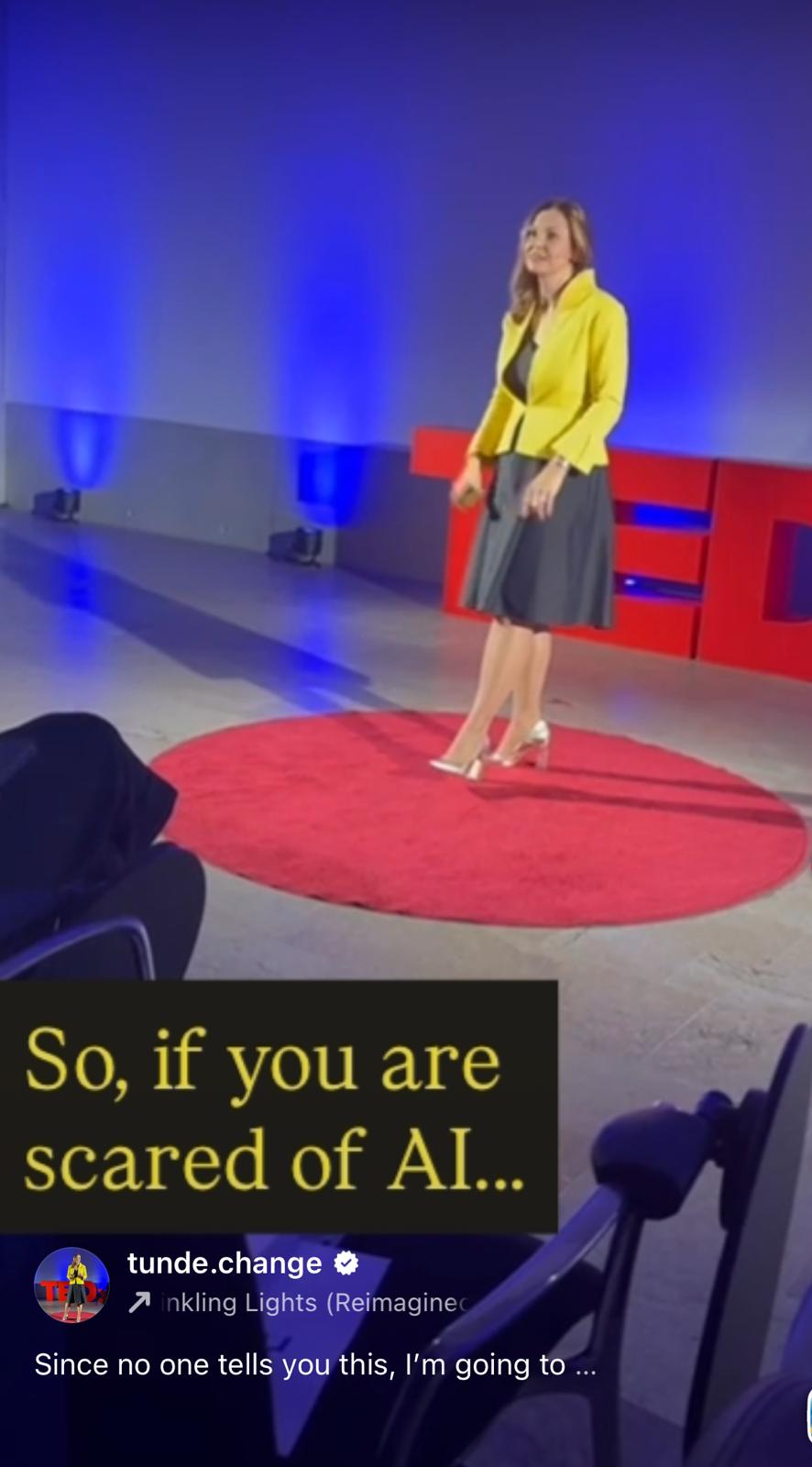
Last weekend, I stood on a red carpet at TEDx HWZ, the only TEDxevent organized in my hometown, Zürich this year, and talked about “What AI can't hear”. While I am waiting for the YouTube link, I have shared some thoughts here:

But I did not share everything.
Here's the part that you need to know about this talk: I built much of that talk with AI.
Yeah. The irony isn't lost on me.
Let me walk you through how this actually happened, because honestly, it taught me more about human-AI collaboration than any research paper ever could.
When "I Know My Message" Isn't Enough
I knew what I wanted to say. That part was clear.
We are all terrified of AI replacing us while we ignore each other. We need to do more of what makes us human—listening, connecting, being present.
TED talks need a simple, quotable message: check, I had that.
But here's the thing: a TEDx talk isn't a monologue or a fireside chat.
It's entertainment. It's performance. And I'm an analytical type who needed to figure out the formula before I could even start.
So I did what any data-driven person would do. I went hunting for patterns.
→ I asked ChatGPT Deep Research to collect the 15 most watched (successful) TEDx talks, and pulled the transcripts. Not TED. TEDx. Because I needed to understand what works for regular people like me, not celebrities.
Then I added my personal favourite TEDx talks, the ones I actually enjoyed watching not because of the topic, but because something about the delivery worked.
Then I threw at ChatGPT the transcripts of all these talks.
I asked: What are the common elements? What's the proportion of data versus personal stories versus audience interaction? How complex is the "idea worth sharing"? When does it appear in the talk? How many times is it repeated?
The analysis came back with building blocks. A structure I could actually work with.
→ Then I ran another Deep Research on data around my key message: we are scared of AI, people think AI is not empathetic etc. What supports it? What contradicts it? I needed verified sources, real research, numbers that would hold up under scrutiny.
→ Once I had all that material—the building blocks, the structure, the data, my rough ideas, I put it into a custom GPT. All in one place, like a chamber in my brain. From this point on, I asked the custom GPT to find exact quotes or give me improvement suggestions. It became my working space.
When AI Knows Your Stories Better Than You Do
→ Here's where it got interesting.
One building block was "personal story." I knew I needed one, but which story? I talk about a lot of things. I coach people through change. I facilitate innovation workshops. What story actually belonged here?
I asked my AI coach to look through everything I've documented over the past two years—workshops, speaking engagements, podcast appearances, LinkedIn posts. All of it. Find me something that connects to this topic.
And you know what it found?
My stories on being nervous before speaking in public..
That thing I've felt before every single talk for years but never really talked about publicly. The AI pulled up fragments from different conversations where I'd mentioned it, connected them, and basically said: "This is your story. You just haven't told it yet."
It was sitting there in my mind the whole time. I'd lived it. But I couldn't see it until AI held up the mirror.
That became one of the most powerful moments in the talk—when I told the audience about standing backstage, nervous, and how my son's hug and a stranger's encouragement gave me something my AI preparation tools never could: presence.
The Back-and-Forth
→ Once I had my building blocks lined up, I started writing. Or trying to write. Some sections flowed from my fingers. Others I'd rough out and ask AI to rephrase. Then I'd rewrite what AI wrote because it sounded too polished. Then back again.
The rule throughout? Fifth-grade language. If a 10-year-old couldn't understand it, it wasn't going in.
→ When I had a draft, I went back to ChatGPT Deep Research one more time. This round: analyze my favorite TEDx talks for presentation techniques. When do they pause? How do they involve the audience? What makes a moment land?
That's how I ended up with the six-second eye contact exercise. AI didn't invent it, but it helped me see where that kind of moment needed to go.
What This Actually Taught Me
Building this talk was like having a really smart research assistant who never gets tired, never judges your half-formed ideas, and can spot patterns across hundreds of hours of content in minutes.
But here's what AI couldn't do:
It couldn't feel my nervousness before the talk. It couldn't know that my son's hug mattered more than any breathing exercise. It couldn't create the moment when I looked at the audience and we all sat with six seconds of awkward silence together.
AI helped me build the base. I brought the humanity.
So yeah, I used AI to build a talk about what AI can't hear. And I'd do it again in a heartbeat. Because the real skill isn't avoiding AI. It's knowing when to let it help and when to step in with the irreplaceable human stuff.
That's the collaboration we need to figure out. Not human versus machine. Human with machine, each doing what they do best.
This is the conversation I bring to corporate and community stages—how to work with AI without losing what makes us irreplaceable. My 2026 speaking calendar is booking fast. Reach out if you want this message at your next event.

Did you miss our last newsletters?
Inboxes can get a little crazy, right? Just in case you missed them, here are the links to our previous newsletters:
- Newsletter #21: I'm showing the messy middle beats chasing perfection—and why AI can’t replace the human moments that make growth real. Insights, stories, and tools for leaders navigating change. → LINK HERE
- Newsletter #20: I'm sharing how three hidden Claude settings can 10x your workflow and why The Change Republic is becoming a practice space, not just more content. → LINK HERE
- Newsletter #19: I’m sharing how AI can bridge human connection, why unlearning success habits matters, and how powerful questions fuel growth. → LINK HERE
Thanks for reading. Just drop a quick reply if you have any feedback.
Wishing you a great weekend ahead.
Warm regards,
Tap the buttons to stay connected!


How can we work together?
- Hire me as your executive coach to help you master change.
-
Not ready for 1:1? Try my AI twin coach. Use her pieces of advice or get a proper coaching conversation. Free version available. And for a whooping 9 CHF per month, you have her for a year by your side.
- Book me as a speaker, panelist or moderator for your event. This is what it's like when I speak at your event.


Responses